
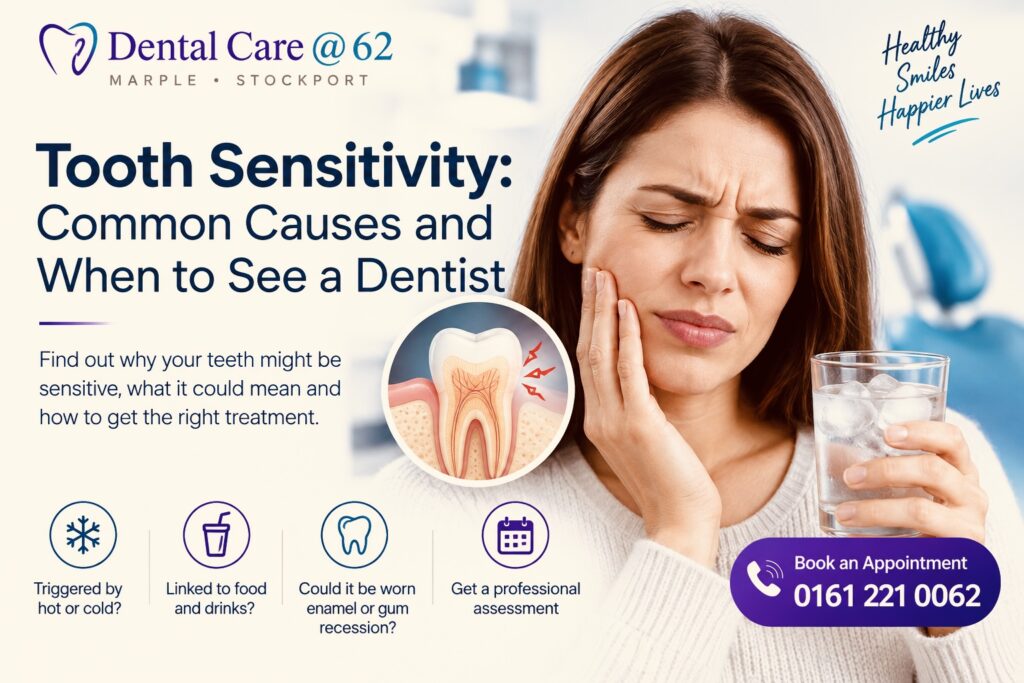
A sharp twinge when you drink tea, eat ice cream or breathe in cold air can make everyday moments surprisingly uncomfortable. Causes of tooth sensitivity range from minor surface wear to problems that need prompt dental attention, so it is sensible not to simply put up with it – particularly when the feeling is new, worsening or focused on one tooth.
Sensitivity is common, but it is not a diagnosis in itself. It happens when the inner, more sensitive part of a tooth is exposed or irritated. A dental assessment can help identify why it is happening and, just as importantly, whether the tooth can be protected before the problem becomes more complex.
What does tooth sensitivity feel like?
Tooth sensitivity is usually a brief, sharp pain or jolt triggered by something hot, cold, sweet, acidic or sometimes by brushing. It may affect a single tooth or several teeth. The discomfort often settles quickly once the trigger has gone.
This is different from a lingering toothache, pain that wakes you at night, or pain when biting. Those symptoms can point towards decay, a crack, inflammation inside the tooth or another condition that needs a careful examination. There can be overlap, however, which is why it is unwise to diagnose the cause from symptoms alone.
Common tooth sensitivity causes
Enamel wear
Enamel is the hard outer layer of the tooth. Although it is very strong, it can gradually wear or dissolve. Frequent acidic drinks and foods, including fizzy drinks, fruit juices, wine and some sports drinks, can soften enamel. Reflux and repeated vomiting may also expose teeth to stomach acid.
Avoid brushing immediately after acidic food or drink, as the enamel surface may be temporarily softened. Rinsing with water and reducing how frequently acidic foods and drinks are consumed can also help limit further wear.
Gum recession and exposed tooth roots
Gums can recede for several reasons, including gum disease, over-vigorous brushing, naturally thin gum tissue, smoking and tooth movement. When the gumline moves down, it exposes the root surface. Roots do not have the same thick enamel covering as the visible crown of a tooth, so they can react more easily to temperature and touch.
Recession does not always mean a serious problem, but it should be assessed. If gum disease is contributing, treating the inflammation and improving daily plaque removal are central to protecting the supporting tissues around the teeth.
Tooth decay and leaking restorations
Decay can create a pathway for hot, cold and sweet sensations to reach the sensitive inner layers of a tooth. Early decay may cause no symptoms at all, while a deeper cavity may cause sensitivity that lasts longer after a trigger.
Older fillings, crowns or bonding can also develop gaps or wear at their edges over time. This does not automatically mean they need replacing, but it does mean the tooth and restoration should be checked. A repair may be appropriate in some cases; in others, replacement or a different protective restoration may be considered.
Cracks, chips and worn teeth
A crack can be difficult to see and may cause a sudden pain when biting or when releasing the bite. Teeth can crack after biting hard foods, through injury, or as a result of repeated clenching and grinding. Small chips can also expose sensitive areas.
Grinding, often during sleep, may flatten or wear teeth gradually. Some people notice morning jaw tension, headaches or fractured fillings as well as sensitivity. A protective night guard may be considered after an assessment, but it is important to understand the cause of the wear rather than treating every case in the same way.
Brushing habits and whitening products
A firm toothbrush, abrasive toothpaste or scrubbing across the gumline can wear away tooth structure and irritate gums. Gentle, small circular movements with a soft toothbrush are usually more effective and kinder to the gumline than hard scrubbing.
Whitening products can cause temporary sensitivity for some people, particularly when used too often or when teeth already have exposed roots, cracks or decay. Whitening should be paused if sensitivity is significant. A dentist can advise whether whitening is suitable and how to manage sensitivity without overlooking an underlying problem.
Recent dental treatment
It is possible to experience temporary sensitivity after a filling, crown, deep clean or whitening treatment. The tooth and surrounding tissues can take time to settle, particularly after treatment close to the nerve. Mild symptoms that improve are often monitored, but increasing pain, swelling or a bite that feels high should be reported to the dental team.
When sensitivity may be more than sensitivity
If the pulp becomes irreversibly inflamed or infected, root canal treatment may sometimes be needed to treat the inside of the tooth and retain it where appropriate.
A dentist will consider your symptoms alongside an examination, bite tests and X-rays. For more complex concerns, advanced imaging such as CBCT may be useful in selected cases, but it is not needed for every sensitive tooth. The aim is to gather enough information to make a careful, proportionate plan.
What you can do while arranging an appointment
Brush twice daily with a fluoride toothpaste. A toothpaste formulated for sensitive teeth may help reduce symptoms associated with exposed dentine when used regularly. Spit out after brushing rather than rinsing immediately with water.
Try to reduce frequent acidic snacks and drinks and avoid brushing immediately afterwards. If very cold foods or drinks trigger sensitivity, avoiding them temporarily may make things more comfortable while you arrange an assessment.
These steps may settle symptoms caused by minor wear or exposed dentine, but they are not a replacement for assessment when sensitivity persists. Desensitising toothpaste cannot repair a cavity, seal a crack or treat gum disease.
When should you contact a dentist promptly?
Arrange a dental assessment if sensitivity persists, keeps returning, is becoming more noticeable or begins to affect eating and drinking. Seek advice sooner if the pain is severe, lingers after the trigger has gone, affects one particular tooth, or is associated with other symptoms:
- pain that lingers after hot or cold food and drink
- pain on biting, a cracked tooth or a lost filling
- swelling, a bad taste, fever or feeling unwell
- a darkening tooth, bleeding gums or a loose tooth
Call 999 or go to A&E if you develop severe swelling of the mouth, throat or neck, difficulty breathing, speaking or swallowing, or swelling around the eye with sudden problems with your vision. For urgent dental symptoms without these emergency signs, contact a dentist promptly or use NHS 111 if you cannot access urgent dental care.
Sensitivity in children and nervous patients
Children may struggle to describe whether a tooth is sensitive, so look out for avoiding one side when chewing, reluctance to eat cold foods, or changes in brushing. Decay in baby teeth can still cause pain and infection, and early advice can often make treatment simpler.
For nervous patients, it can help to say at the outset that you are worried about sensitivity or dental treatment. A calm appointment with clear explanations, breaks when needed and an agreed plan can make the experience more manageable. There is no judgement in seeking help after putting symptoms off.
At Dental Care @ 62 in Marple, we assess sensitive teeth with the same care as any other dental concern: listening to what you are experiencing, examining the likely causes and discussing sensible options for your circumstances. If a tooth has started reacting differently, arranging an appointment now may help protect it and give you clearer answers.
0 comments on “Tooth Sensitivity: Common Causes and When to See a Dentist”