
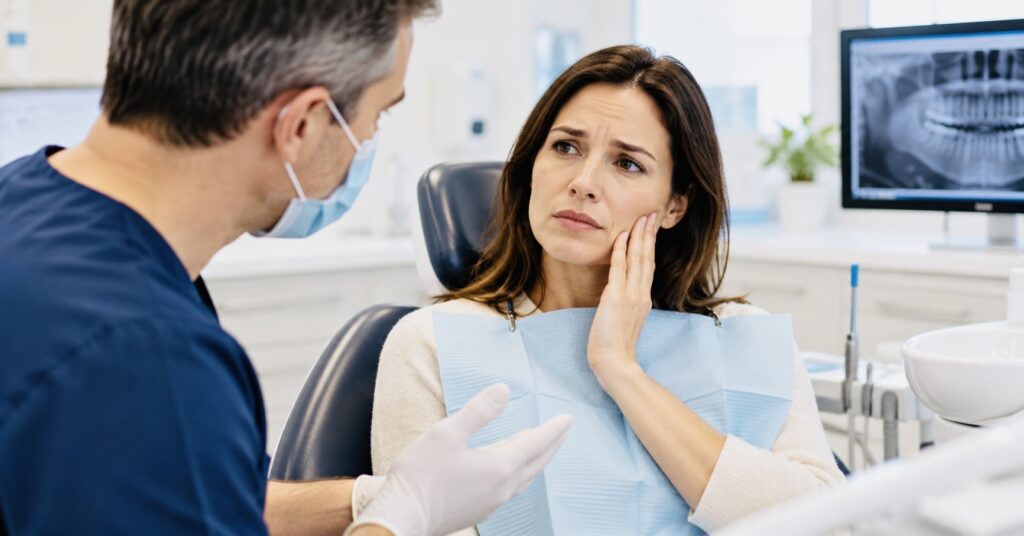
A cracked tooth during dinner, a child who has fallen at school, or a sudden throbbing toothache can all be unsettling. Dental emergencies are not always dramatic, but prompt, sensible action can relieve discomfort, reduce the risk of further damage and, in some cases, help save a natural tooth.
The first priority is to stay calm. Many problems that feel urgent can be assessed and treated by a dentist, often on the same day. However, swelling that affects breathing or swallowing, severe facial injuries, or bleeding that will not stop need urgent medical attention through 999 or A&E.
Same-Day Emergency Dentist in Marple, Stockport
Dental pain and emergencies rarely happen at convenient times. Whether you are experiencing severe toothache, a broken tooth, a lost filling or unexpected swelling, getting prompt professional advice can make a real difference.
At Dental Care @ 62, we offer same-day emergency dental appointments, subject to availability, for patients in Marple, Stockport and surrounding areas.
Our experienced dental team will assess your concerns, explain the available treatment options and aim to relieve discomfort as quickly and safely as possible.
Where appropriate, we focus on preserving natural teeth through treatments such as root canal therapy and restorative dentistry. If extraction or further investigation is necessary, we will explain the options clearly.
Need an emergency dentist today?
Call 0161 221 0062 to enquire about our earliest available emergency appointment.
For emergencies involving difficulty breathing or swallowing, call 999 immediately.
What counts as a dental emergency?
A dental emergency is usually a problem involving significant pain, infection, bleeding, trauma or a tooth that has been knocked out or badly damaged. It does not necessarily mean that treatment will be complicated, but it does mean that waiting for a routine appointment may make the outcome less favourable.
Examples include a severe toothache, a broken or knocked-out tooth, a lost crown causing pain, facial swelling, an abscess, uncontrolled bleeding after an extraction, or trauma to the teeth, lips, tongue or jaw.
A small chip with no discomfort, a loose filling that is not painful, or mild sensitivity may not require immediate treatment. Even so, it is sensible to arrange an appointment soon. Small problems can progress, particularly if bacteria enter a cracked tooth or an old restoration.
Dental emergencies that need urgent attention
Severe toothache or sudden sensitivity
Persistent, intense pain can be caused by deep decay, a crack, gum infection, an inflamed dental nerve or an existing filling or crown that has failed. Painkillers may temporarily take the edge off, but they do not treat the cause.
Use over-the-counter pain relief only as directed on the packet and only if it is suitable for you. Avoid placing aspirin, clove oil, alcohol or other substances directly on the gum or tooth. These can irritate or burn delicate tissues. A warm salt-water rinse may help keep the area clean, and avoiding very hot, cold or sugary foods may reduce sensitivity until you are seen.
Antibiotics are not routinely required for toothache. In most cases, identifying and treating the underlying dental problem is the most effective approach. Antibiotics may be prescribed where clinically indicated, particularly when there are signs of spreading infection or systemic involvement. Your dentist will determine the appropriate treatment following assessment.
A knocked-out tooth
A permanent adult tooth that has been completely knocked out needs immediate attention. The sooner it is replanted, ideally immediately, the better the chance of saving it.
Find the tooth and pick it up by the crown (the part normally visible in the mouth), never by the root. If dirty, gently rinse it briefly with milk, saline or the patient’s saliva. Do not scrub, disinfect or allow it to dry out.
If it is safe and practical, gently reposition the permanent tooth into its socket and ask the patient to bite on clean gauze or a soft cloth to hold it in place.
If this is not possible, place the tooth in an appropriate tooth-preservation solution or milk and seek emergency dental care immediately. Avoid storing a tooth inside the mouth of a young child because of the risk of swallowing or choking.
Never reimplant a baby tooth, as this may damage the developing permanent tooth underneath. Children with dental trauma should still receive prompt dental assessment.
A broken, cracked or displaced tooth
A broken tooth may have a sharp edge, expose the sensitive inner layer, or leave a larger fracture that is difficult to see. Rinse gently with warm water and keep any broken pieces if you can find them. Applying a cold compress to the outside of the cheek can help with swelling after an injury.
Do not chew on the affected side. Depending on the damage, treatment may involve smoothing a sharp edge, bonding, a filling, a crown, root canal treatment or, occasionally, removal of a tooth that cannot be predictably restored. The aim is generally to preserve natural tooth structure wherever appropriate, but the right option depends on the crack, the nerve and the supporting bone.
Swelling, abscess or a bad taste in the mouth
A dental abscess is an infection that can develop around the root of a tooth or in the gum. It may cause a painful swelling, a bad taste, fever or discomfort when biting. Antibiotics are not always the answer on their own. The source of infection often needs dental treatment, such as drainage, root canal treatment or extraction.
Contact a dentist urgently if you develop facial swelling, particularly if it is increasing or accompanied by pain or fever.
Seek emergency hospital assessment if swelling is spreading rapidly, affects the area around the eye, is associated with severe illness or causes significant difficulty opening the mouth.
Call 999 immediately if you have difficulty breathing or swallowing, or signs of airway compromise. These may indicate a potentially life-threatening infection requiring urgent medical treatment.
Lost fillings, crowns and temporary restorations
A lost filling or crown is not always an emergency, but it can leave a tooth painful, sharp or vulnerable to fracture. Keep the crown if it has come away and avoid sticky foods or chewing on that side. Do not use household glue to fix it back in place.
A dentist can assess whether the restoration can be recemented or whether the tooth underneath needs further treatment. If the tooth is weak, delaying for too long may turn a manageable repair into a more involved restoration.
What to expect at an emergency dental appointment
The first job is to understand what is causing the problem and make you comfortable. Your dentist will ask about the pain, injury or swelling, examine the area and may take X-rays. In more complex cases, three-dimensional CBCT imaging can provide detailed information about roots, bone and nearby structures when this is clinically appropriate.
Emergency treatment is sometimes focused on stabilising the situation: relieving pressure from an infection, placing a temporary restoration, smoothing a broken tooth or providing a protective dressing. Definitive treatment may follow once the tooth and surrounding tissues have been properly assessed.
For example, a severely inflamed tooth may need root canal treatment to remove infection from inside the tooth and retain it. A deeply fractured tooth may require a crown after the underlying problem has been addressed. If a tooth cannot be saved, your dentist should explain the reasons clearly and discuss suitable replacement options rather than rushing a decision.
During your emergency appointment, our priority is to identify the cause of the problem, relieve discomfort where possible and explain your treatment options. Some conditions may require further appointments, investigations or referral to another service.
If you are nervous about urgent dental treatment
Dental pain can make anxiety feel much more intense, especially if you have had a difficult experience in the past. Tell the dental team if you are worried. A calm explanation of what is happening, regular check-ins and an agreed signal for taking a pause can make urgent care feel more manageable.
You should be given clear information about the findings, the options available, likely benefits and limitations, and any costs before non-emergency treatment proceeds. An emergency appointment is not a reason to compromise on informed choice.
Preventing another urgent problem
Not every emergency can be prevented, particularly accidents and sports injuries. A well-fitted mouthguard is worth considering for contact sports, and prompt repair of worn fillings, cracked teeth and loose crowns can reduce avoidable risks.
Regular examinations also help identify decay, gum disease, bite problems and failing restorations before they become painful. For people who grind their teeth, a professionally made protective appliance may be considered where appropriate. Good home cleaning and a diet that limits frequent sugary snacks and drinks remain important foundations for both children and adults.
Emergency Dental Care in Marple and Stockport
Dental emergencies can happen unexpectedly, whether it is a severe toothache, a broken tooth, facial swelling or a dental injury.
At Dental Care @ 62 in Marple, Stockport, we understand how distressing dental pain can be. Our team aims to provide calm, compassionate advice and appropriate assessment, with a focus on relieving discomfort and preserving natural teeth wherever possible.
Need urgent dental advice?
Call 0161 221 0062 to speak to our team about your symptoms and appointment availability.
If you have difficulty breathing or swallowing, severe facial swelling or uncontrolled bleeding, seek emergency medical attention rather than waiting for a dental appointment.
0 comments on “Dental Emergencies in Stockport: What to Do”