
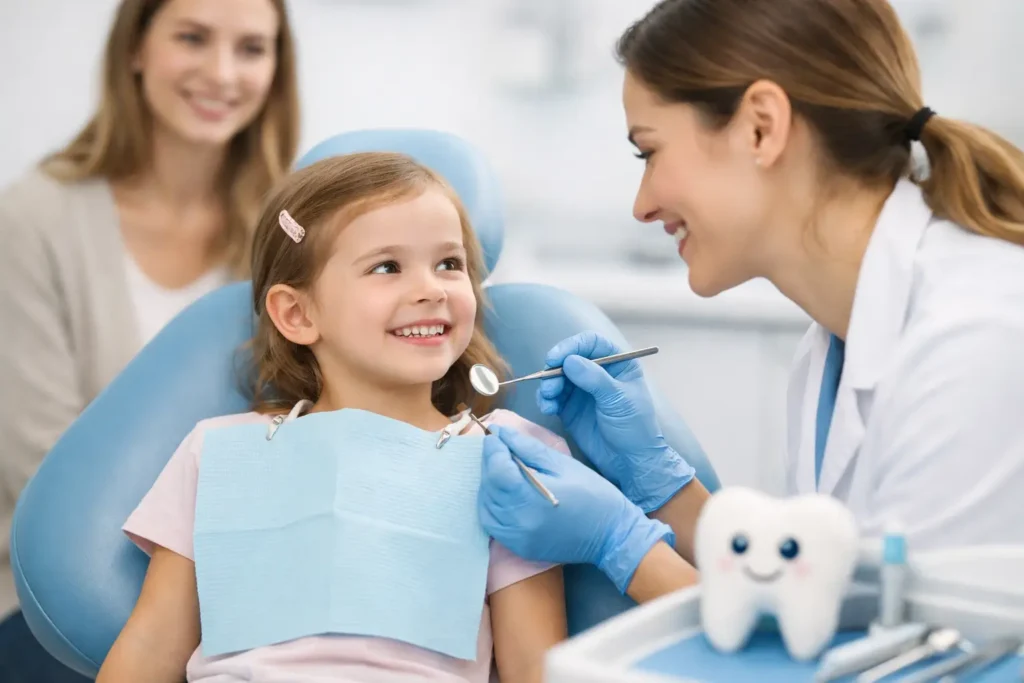
Looking for a children’s dentist in Stockport? Starting dental visits early can help children become familiar with the dentist long before they develop toothache or need treatment. For many families, the first appointment is simply an opportunity to meet the team, count teeth, discuss brushing and let a child see that the dental chair is nothing to fear.
At Dental Care @ 62 in Marple, we understand that every child responds differently. Some will be keen to climb into the chair and talk about their favourite things. Others may need more time, reassurance and short, gentle visits. Both are entirely normal.
When should your child first see a dentist in Stockport?
Children should have their first dental visit when their first milk teeth appear, and ideally by the age of one. This may sound early, but baby teeth can develop decay soon after erupting. An early check allows a dentist to look at how the mouth and jaws are developing, offer practical advice and identify concerns before they become uncomfortable.
After that, the right recall interval depends on your child’s individual needs. A child with healthy teeth, a low risk of decay and good brushing habits may not need appointments as often as a child who has had decay, is prone to plaque build-up or is wearing orthodontic appliances. Regular reviews are planned around risk, rather than using the same timetable for every family.
There is no need to wait for a problem. However, an earlier appointment is sensible if you notice toothache, a swollen gum or face, a knocked or broken tooth, darkening of a tooth after an injury, persistent bad breath, bleeding gums, or difficulty eating. If your child has dental pain or swelling, contact a dentist promptly.
What happens at a child’s dental appointment?
The first visit is usually calm and straightforward. We begin by getting to know your child and listening to any worries you or they may have. Depending on their age and confidence, we may count their teeth, check the gums and bite, and show them simple parts of the dental equipment in an unhurried way.
Parents are encouraged to share relevant information, including previous dental experiences, medical conditions, medicines, dietary habits and any concerns about brushing. For younger children, being able to sit on a parent’s lap for part of the visit can make the experience feel more secure.
If X-rays are clinically appropriate, the dentist will explain why they are being considered. X-rays are not taken routinely without a reason. They can be useful for checking between teeth, assessing developing adult teeth or investigating pain, but the benefit should always justify the exposure.
A successful first visit does not need to involve lots of treatment or even a full examination if a child is particularly anxious. Building trust is a worthwhile clinical outcome in itself. With patience and consistency, many children become more comfortable at their own pace.
Why baby teeth deserve careful attention
It is tempting to think baby teeth matter less because they are eventually replaced. In reality, they support chewing, speech development and confidence, and they help guide adult teeth into position. Losing a baby tooth early because of decay or infection can sometimes affect the space available for the adult tooth beneath it.
Tooth decay can also be painful and disruptive. It may affect sleep, concentration at nursery or school, and the foods a child is able to eat comfortably. Preventing decay where possible is kinder and usually less complex than treating it once it has progressed.
A dentist may recommend fluoride varnish as part of preventive care. This is a concentrated fluoride coating applied to the teeth to help strengthen enamel and reduce the risk of decay. The recommendation will depend on age, decay risk and the condition of the teeth.
Everyday habits that protect young teeth
The most effective dental care happens at home between appointments. Children need help with brushing for longer than many parents expect, because the skill and concentration required are still developing. Young children will need help with brushing, and parents should continue to supervise brushing until at least the age of seven, adapting this according to the individual child.
Brush twice a day, including just before bed, using a fluoride toothpaste appropriate for your child’s age. For children under three, use a smear of toothpaste. From age three, a pea-sized amount is usually advised. Encourage them to spit after brushing rather than rinsing with water, as rinsing washes away the protective fluoride left on the teeth.
Frequent sugar exposure is often more damaging than the total amount eaten at one sitting. Teeth need time between sugary foods and drinks to recover from acid attacks. Keeping sweets, biscuits, sweetened drinks and juice to mealtimes where possible can make a meaningful difference. Water and milk are generally kinder choices between meals.
This is not about perfection or judgement. Family routines are busy, and many parents are managing fussy eating, packed lunches and competing demands. A dental team can offer realistic, individual advice rather than a one-size-fits-all lecture.
Helping an anxious child feel more comfortable
Children often take their cues from the adults around them. It can help to describe a visit simply and positively: the dentist will look at their teeth and help keep them strong. Try not to promise that nothing will happen, as this can unintentionally create worry if an examination or treatment is needed.
Avoid using dental visits as a consequence for eating sweets or not brushing. Dentistry should feel like healthcare, not a punishment. Bringing a comfort item, arranging an earlier appointment when children are less tired, and allowing extra time can also help.
If your child has had a difficult experience elsewhere, tell the dental team before the appointment. There is no embarrassment in dental anxiety, and previous distress should be taken seriously. A gradual approach, clear explanations and agreed stop signals can help a child feel more in control.
Monitoring tooth development and orthodontic concerns
As adult teeth begin to erupt, a dentist will check the way the teeth and jaws are developing. Not every crooked tooth requires early treatment. Children’s mouths change considerably as they grow, and in some cases monitoring is the most appropriate option.
However, an early assessment may be useful if you notice a pronounced overbite or underbite, crowding, crossbite, difficulty biting or chewing, mouth breathing, or adult teeth erupting in an unusual position. A child who sucks their thumb or finger beyond the early years may also benefit from advice, particularly if it is affecting tooth position or the bite.
Where orthodontic treatment may be beneficial, parents should receive a clear explanation of the timing, available options and what treatment would involve. Fixed braces and clear aligners can be suitable in different circumstances, but suitability depends on the bite, oral hygiene, cooperation and stage of dental development.
What if a tooth is damaged or knocked out?
Childhood falls and sporting knocks are common. If a baby tooth is knocked out completely, do not try to put it back in. Reimplanting a baby tooth may damage the developing adult tooth. Contact a dentist for advice, particularly if there is bleeding, pain or a cut to the lips or gums.
If an adult tooth is knocked out, seek urgent dental advice. Handle the tooth only by the crown, not the root. If it is dirty, gently rinse it in milk, saline or briefly under cold running water without scrubbing. If you feel confident and it is safe to do so, the tooth may be gently repositioned in the socket. Otherwise, keep it in milk and seek urgent dental care immediately. Otherwise, keep it in milk and seek urgent dental care. A dentist can advise based on the injury and your child’s age.
A tooth that turns grey or dark after a knock should also be checked. It may settle without treatment, but colour change can indicate trauma to the nerve inside the tooth and needs monitoring.
A calm start can shape lifelong habits
Children do not need to be fearless to attend the dentist. They simply need to feel listened to, treated with kindness and given time to become familiar with the experience. Regular, preventive visits can help parents make informed choices and give children a confident start with their oral health.
Looking for a children’s dentist in Marple or Stockport?
Dental Care @ 62 welcomes children and families for preventive and routine dental care, dental problems and assessment of developing teeth. We understand that some children need extra time and reassurance to feel comfortable at the dentist, and our team takes a calm, individual approach to each child.
Contact Dental Care @ 62 to arrange your child’s appointment or speak to our team about their dental needs. New patients are welcome.
0 comments on “Children’s Dentist in Stockport: When Should Your Child First Visit the Dentist?”